You need to enable JavaScript to run this app.
Home
ToursCreate Your Trip

Guide to Transportation in Italy: Best Ways to Get Around

Wondering how to get around in the Italian cities on your next picturesque getaway? Italy has a developed public transport system that operates in the majority of cities and makes traveling around town-limits a lot easier.

Last updated: 13.06.2025

Train Travel: Fast, Efficient, and Scenic

High-Speed Trains
Italyโ€™s high-speed trains, such as Frecciarossa and Italo, offer quick connections between major cities like Rome, Florence, Milan, and Naples. These trains are comfortable, fast, and provide modern amenities, making them the best way to travel in Italy for those who want to get from one destination to another without delay.
Regional Trains
For those exploring smaller towns or rural areas, regional trains provide a scenic and relaxing way to travel. They are an excellent option for discovering the Italian countryside and historical villages, often offering unbeatable views of regions like Tuscany and the Italian Riviera.
Why Trains Are Best
Trains are fast, reliable, and provide a comfortable way to experience Italyโ€™s famous landscapes. As part of your travel in Italy, they offer direct routes, comfort, and a relaxed atmosphere, making them a top choice for many travelers.

Buses: Best for Short Journeys, But Not for Long Distances


Buses are often a cheaper alternative for shorter distances, but theyโ€™re not the best way to travel in Italy for long distances.
  • Short-Distance Travel: For getting around smaller towns or traveling to destinations that are not easily accessible by train, buses can be a great option. They connect various locations within Italy that may not be served by rail.
  • Long-Distance Drawbacks: Although buses are affordable, they are typically slower and less comfortable than trains for long trips. A bus ride from Rome to Milan can take up to 8 hours, whereas the same journey by high-speed train takes just 3 hours. For this reason, buses are better suited for short, scenic trips rather than long-haul travel.

Domestic Flights: Quick Travel for Distant Regions


Flights can be the best way to travel in Italy when you need to cover large distances in a short time.
  • When Flights Are Useful: For traveling to Italyโ€™s islands, like Sicily or Sardinia, flights are often the fastest and most efficient option. These destinations can take several hours to reach by train and ferry, while flights typically take under 2 hours.
  • Not Always Necessary: For mainland travel, trains are generally more convenient and comfortable. Flying within Italy can add time for check-in and security, and the time spent on transfers often makes flying less efficient than taking a high-speed train.
  • The best way to experience the essence of Italy is by joining the 17-day small-group tour, Bella Italia with Amalfi and Classic Sicily. This immersive journey covers Italy's most iconic destinations, from the stunning Amalfi Coast to the historic treasures of Sicily!

Ferries: Scenic Coastal Travel

Italyโ€™s extensive coastline makes ferries a wonderful way to explore its islands and coastal cities.
  • Popular Ferry Routes: Ferries connect mainland Italy with islands like Sicily, Sardinia, and others off the Amalfi Coast. Ferries offer a leisurely and scenic journey, giving you the chance to enjoy beautiful views of the Mediterranean Sea.
  • Why Not for Long Distances: While ferries are great for coastal travel, theyโ€™re not typically used for longer distances within the mainland. For instance, taking a ferry from Naples to Capri is a perfect choice, but for traveling from Naples to Milan, trains or flights are far more practical.

Car Rentals: Freedom to Explore Hidden Corners

While trains are often the best way to travel in Italy for long distances, renting a car is an excellent option for exploring Italyโ€™s more remote and scenic areas.
  • Ideal for the Countryside: Areas like Tuscany, the Amalfi Coast, and Sicily are best explored by car. A rental car gives you the flexibility to stop at charming villages, scenic vineyards, and hidden gems along the way.
  • Driving in Italy: While driving allows flexibility, be mindful of ZTL (Limited Traffic Zones) in historic city centers. These zones restrict access to non-residents, so make sure to plan your route carefully to avoid fines.
  • Why Cars Arenโ€™t Always Ideal for Long Distances: While perfect for regional exploration, cars arenโ€™t the best way to travel in Italy for long-haul journeys. Italian roads can get crowded, especially in and around major cities, and parking can be challenging to find. Trains are usually more convenient for long-distance travel.

In-City Transportation

Metro System in Italy

The Italian metro system (Metropolitana) is laid in such big cities as Rome, Milan, Naples, Catania, Turin, Genoa, Bari, and Palermo. Metro is the most comfortable way to move around the cities.

In Rome, the metro opens at 5:30 a.m. and functions till 11:30 p.m. on weekdays and till 12:30 a.m. on Saturdays and Sundays, running with 4-5-minute intervals. The ticket for 75 minutes will cost you 1 โ‚ฌ. There also exist tickets for 1 day - 4 โ‚ฌ, 3 days - 12 โ‚ฌ, a week, a month, and a year.

TIP:
Ticket machines at Metro stations are available in different languages, and very straightforward to use. You just need to work out in advance which ticket you want to buy.

In-City Buses


Practically every city in Italy has an extensive network of bus routes. However, you wonโ€™t succeed in trying to buy a ticket from the bus driver. In most major cities like Rome, Milan, and Florence, you should enter public transport, already having a ticket on hand. Unfortunately, the chance to find a ticket machine next to the bus stop is close to zero, which means you'll have to run to the nearest newspaper or tobacco kiosk. If you plan to move around Italian cities on Sunday, it will be wise to buy some tickets the day before in order not to spend a lot of time looking for a kiosk working on that day. And of course, donโ€™t forget to validate your ticket when boarding a vehicle.
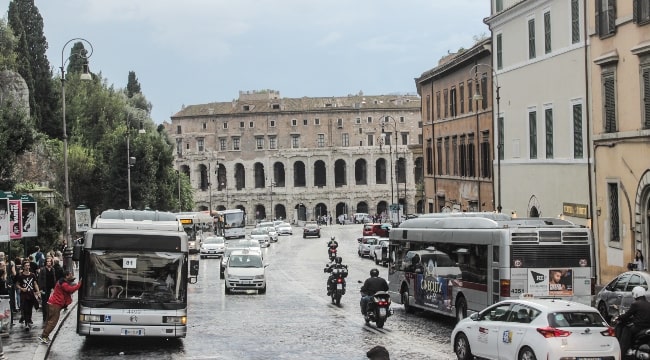
We advise not to take risks and paying for the ride in time as the fines are quite high. The fine can be paid on the spot or at any post office within 2 months. If you do not pay the fine, it can cause problems with further travel around the Schengen zone.

Venice: Navigating the Canals


Venice is one of Italy's most iconic cities, where water transportation plays a crucial role.

  • Vaporetto: Veniceโ€™s public waterbus system, known as the Vaporetto, is the main way to get around the city. It is perfect for exploring the city's many canals and navigating to various islands.
  • Private Water Taxis: For a more exclusive experience, private water taxis are available and provide a more direct route through the cityโ€™s canals.
  • Another great way to get around Venice by water is exploring the city while swaying gently from side to side on an authentic gondola. Join the Bella Italia tour and glide through the enchanting canals of Venice on a classic gondola ride!
In conclusion, understanding Italy transportation options is crucial for crafting the best travel experience. Whether you choose high-speed trains, scenic car drives, or leisurely ferries, each mode of transport offers unique benefits for exploring Italyโ€™s rich culture and diverse landscapes. By selecting the best way to travel in Italy for each leg of your journey, you can make the most of your time in this beautiful country.

Continue reading

Popular Trains in Italy
Explore
Top 7 Major Airports in Italy
Explore
Popular Train Routes in Italy
Explore
Best Time to Travel to Italy
Explore
How to Travel Italy by Train
Explore
Currency in Italy
Explore
Why Visit Italy?
Explore